EUR

Contact Us

SEA.AI & Team Malizia: Training Maritime AI in the World’s Harshest Waters 

SEA.AI and Team Malizia share how real-world Antarctic data is shaping the future of maritime AI.

In Antarctic waters, danger often appears without warning. 

A radar may detect large icebergs from miles away, but dangerous growlers, fragments of floating ice that are often transparent, truck-sized, and less than 1 meter high, can remain nearly invisible in rough seas.

Light conditions shift rapidly. Fog rolls in without notice. At night, crews rely on every available tool to navigate safely through one of the most challenging maritime environments on Earth. 

For Boris Herrmann and Team Malizia, these conditions are not theoretical. They are operational reality. And for nearly a decade, they have also been helping build the maritime AI systems designed to navigate them. 

What began as an early collaboration between Herrmann’s offshore racing campaign and a young maritime technology company called OSCAR has evolved into one of the most unique long-term partnerships in maritime AI development. Today, that company is known as SEA.AI and the partnership continues aboard Malizia Explorer, a dedicated scientific vessel operating in some of the world’s most remote and data-rich maritime environments.

From Offshore Racing to Maritime AI

When SEA.AI was founded in 2018 under the name OSCAR, the vision was ambitious but straightforward: use artificial intelligence, optical cameras, and thermal imaging to help crews detect floating hazards at sea before collisions occur. The challenge was not the concept. It was the data. 

Teaching AI to distinguish waves, debris, marine mammals, vessels, and icebergs in constantly changing ocean conditions requires enormous amounts of real maritime imagery. Unlike automotive AI or industrial computer vision, almost no labeled maritime data existed.

Maritime AI could not be built entirely in a lab. SEA.AI needed real-world operational environments and experienced mariners willing to test the technology where it mattered most: offshore. 

Herrmann was one of the first to say yes. 

His IMOCA race yacht became an early testing platform, exposing the system to some of the harshest conditions in offshore sailing, including Southern Ocean crossings and Vendée Globe campaigns. Every voyage helped refine the technology, improve detections, and build the proprietary maritime dataset that now forms the foundation of SEA.AI’s machine vision systems.

Malizia Explorer: A New Chapter

Today, SEA.AI systems are also installed aboard Malizia Explorer, the new research and expedition vessel operated under Team Malizia leadership. Designed for extended deployments in remote regions, it gives scientists and technology developers rare access to operational maritime data.

For Herrmann, continuing the partnership was a natural step. 

The vessel’s Antarctic missions now generate some of the most valuable maritime AI datasets.

“We have been using SEA.AI technology for years aboard our IMOCA race yacht. As the systems evolved, we saw the value they could bring not only for offshore racing, but for broader maritime operations and exploration. Equipping Malizia Explorer with SEA.AI was a natural continuation of that work.” 
“Since the beginning, the partnership worked because the technology was being tested in real operational conditions. You immediately learn what works offshore and what still needs improvement. And when the crew tells you directly what they experience on the water, that's the kind of feedback that's invaluable when developing maritime systems."

Why Antarctic Data Matters

Machine vision systems learn through exposure to real-world examples. If you feed an AI model enough images of vessels, whales, floating debris, or icebergs under varying conditions, the system gradually learns to recognize patterns and identify potential hazards.

But maritime environments are exceptionally difficult because no two conditions are ever identical. 

Icebergs appear differently depending on light, sea state, weather, water temperature, viewing angle, and time of day. Thermal signatures shift constantly.

Marine mammals surface unpredictably. Fog, snow, spray, and darkness all complicate detection. 

AI-generated imagery can help supplement training data, but it cannot fully replicate the complexity of real operational environments. That is why the data collected by Malizia Explorer is so important. 

The vessel has captured thousands of hours of visual and thermal imagery from Antarctic waters, including real-world iceberg detections, thermal contrast data, marine mammal observations, and low-visibility navigation scenarios. These datasets allow SEA.AI engineers to refine detection models using real operational conditions rather than simulated approximations. 

Captain Jonathan Morice has seen the value firsthand during Antarctic operations. 

Main challenges are icebergs,” Morice explains. “We have radar, which is quite reliable for big icebergs, but then you have those medium-sized icebergs, which are very heavy and can do a lot of damage. The radar doesn’t always pick them up because they don’t go out of the water so much. 

The camera has been very useful during the boat’s trips to Antarctica,” he continues. “I was also quite surprised by the thermal version. Even though you would think an iceberg is cold, with the temperature difference between the ocean and the iceberg, you can really spot anything, even at night. 

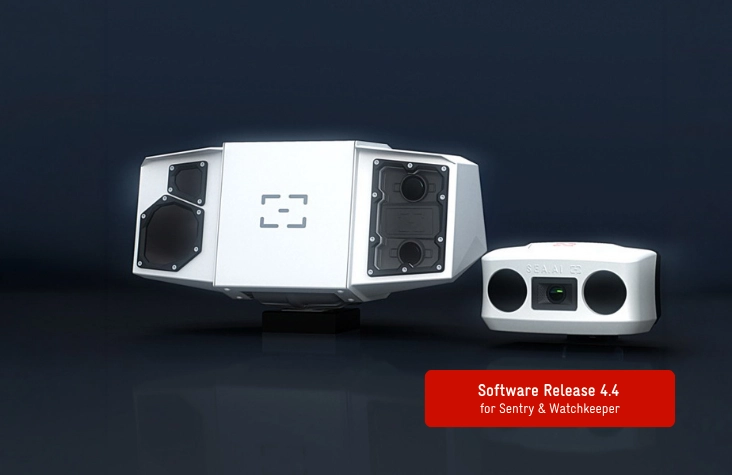
The system is not designed to replace existing navigation tools. Instead, SEA.AI combines optical cameras, thermal imaging, and intelligent analysis to complement radar, AIS, and human decision-making, helping crews build a more complete understanding of their surroundings.

Building Maritime Intelligence Through Real Operations

For SEA.AI, the partnership with Team Malizia demonstrates a simple principle: reliable maritime AI systems are built through continuous exposure to real-world operations.  

That data does not only benefit expedition vessels or offshore race teams. It contributes to the development of machine vision systems intended for broader maritime use from commercial operations and research vessels to cruising sailors and professional mariners navigating increasingly complex waterways. 

We are now experimenting with AI-generated images to supplement our training datasets,” says Gouerou. “But synthetic data can only work as a supplement. Real operational data has to remain the foundation. When you are building systems that need to work reliably at sea, there is no substitute for real-world experience.

Looking Forward

As Malizia Explorer continues its missions, the partnership between SEA.AI and Team Malizia continues to evolve alongside it. What began as an experimental offshore racing collaboration has grown into a long-term effort to build maritime intelligence systems trained in some of the harshest conditions on Earth. 

And with every voyage, SEA.AI learns a little more about the realities of the sea.

©Malizia Explorer

About Malizia-Explorer

Over the past decade, Team Malizia has combined elite Ocean racing with a bold climate and science mission: raising awareness, educating children worldwide, and collecting vital Ocean data.

Building on its strong commitment to science, the team has launched Malizia Explorer: a second sailboat dedicated to science and outreach.

The vessel aims to turn knowledge into action: sharing the science, the stories, and the urgency of the climate crisis in this race we must win. 


Related articles

SEA.AI Joins GICAN

SEA.AI joins GICAN 

Born in Brittany, developed in Europe, for the maritime world: SEA.AI joins GICAN, the French Naval Industry Association.

SEA.AI & Team Malizia: Training Maritime AI in the World’s Harshest Waters 

SEA.AI and Team Malizia share how real-world Antarctic data is shaping the future of maritime AI.

SEA.AI Wins Prix Next Innov 2026

SEA.AI wins the Prix Croissance at Next Innov 2026

Banque Populaire recognizes SEA.AI as one of France’s most high-potential innovators, a milestone that reflects eight years of relentless conviction.