
SEA.AI and Piloda Group Partnership Announced

A collaboration between Piloda Defence, VN Maritime, and Havelsan brings SEA.AI optical awareness technology to the USV12 autonomous surface vessel.

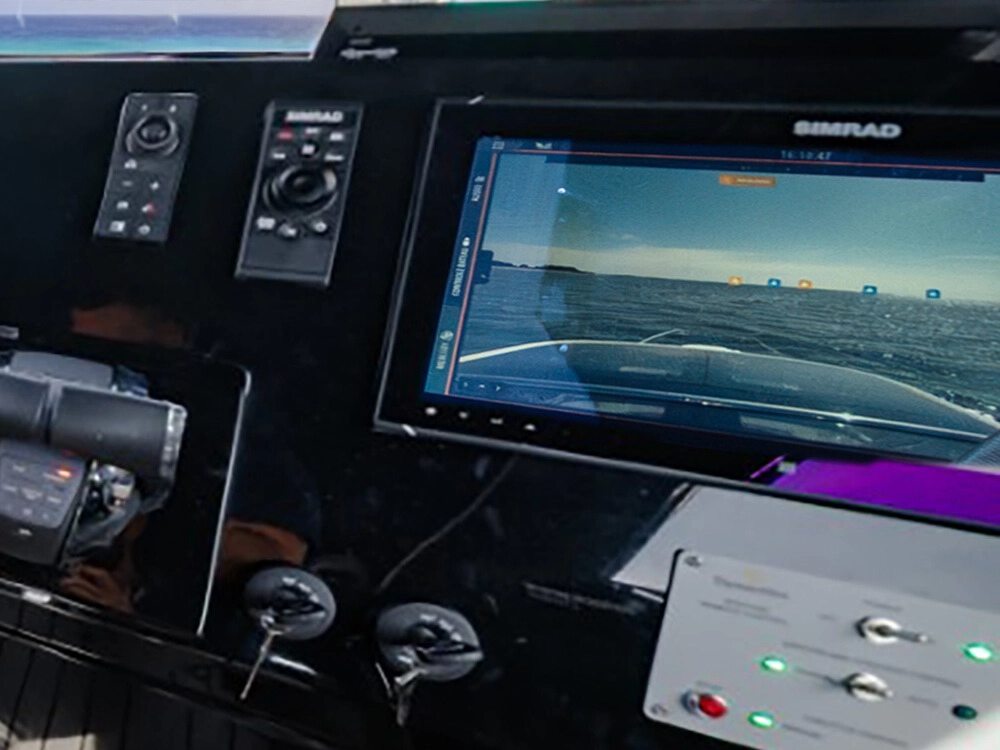
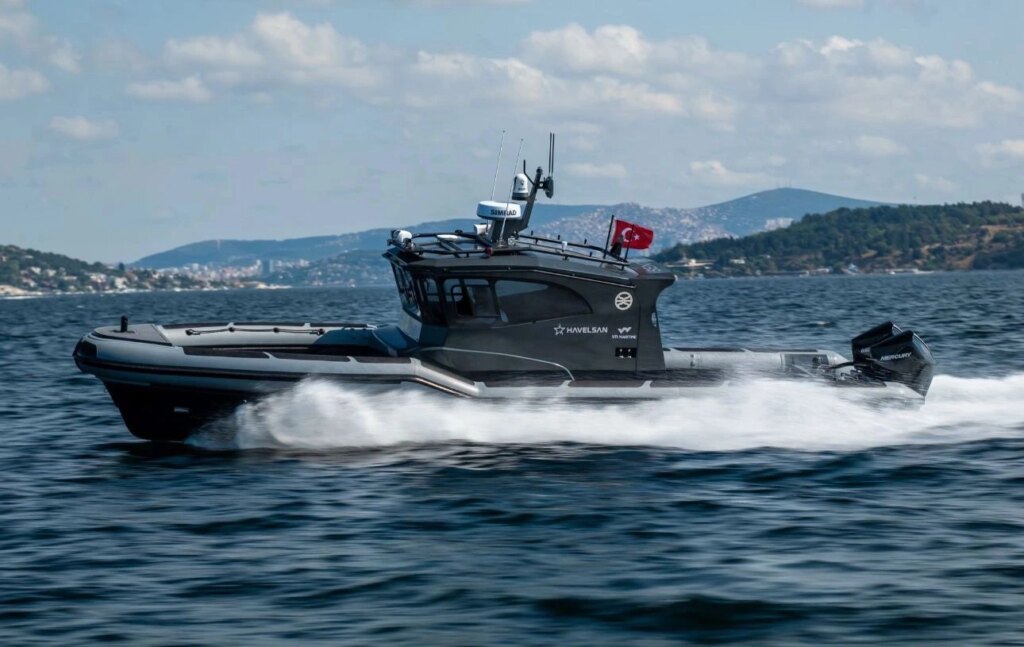
SEA.AI’s advanced optical situational awareness system, Watchkeeper, is now fully integrated into the USV12, a 12-meter Unmanned Surface Vessel (USV) developed by VN Maritime and Havelsan, in collaboration with Piloda Defence and VN Maritime Shipyard. 

About the USV12 Naval Platform

The USV12 is a naval platform that can be configured for either crewed or fully autonomous operations. It is a collaborative development between VN Maritime and Havelsan, with support from Piloda Defence.

Based on the patented Rafnar ÖK Hull, the USV12 represents a new generation of multi-role naval systems which offers exceptional stability and safety, even in challenging sea conditions.

“With the USV12 project, our ambition is to bring together proven seakeeping performance with advanced autonomous capabilities,” said Orkun ÖzekChairman of VN Maritime“Our partnership with Havelsan demonstrates how our engineering can successfully merge innovation and operational reliability, offering a robust platform for both defense and search and rescue missions.” 

Measuring 12 meters in length, the USV12 is designed for real-world missions across defense, maritime security, and search and rescue.

It delivers high-speed performance, exceeding 40 knots, while maintaining exceptional stability and wave-impact reduction through its patented Rafnar hull.

Equipped with advanced onboard systems and autonomous capabilities, the USV12 represents a new benchmark in hybrid naval operations. 

SEA.AI Watchkeeper Technology

Watchkeeper, our latest innovation, is a key component of the USV12’s autonomy and mission-readiness.

Drawing on years of experience providing advanced optical systems to commercial and government operators, Watchkeeper enables real-time detection and classification of radar-invisible or non-cooperative objects, including small boats, fast-moving or low-profile floating hazards, and individuals in the water. 

Fully integrated into the USV12’s mission and control architecture, Watchkeeper enhances autonomous and crew-optional navigation in low-visibility, high-traffic, or GPS- and AIS-denied maritime environments.

It enables reliable object tracking and visual detection even at night, providing real-time alerts for collision risks or perimeter breaches, supporting both navigation safety and mission-specific surveillance tasks. 

“This integration shows that optical AI is now a critical layer for autonomous naval operations,” said Marcus WarrelmannCEO of SEA.AI“We’re proud to support our partners in delivering platforms that are both technically advanced and field-ready.” 

As autonomous vessels increasingly play a role in naval, security, and search and rescue operations, optical and thermal vision systems are essential to situational awareness and mission reliability. 

SEA.AI’s Watchkeeper delivers the real-time visual intelligence necessary for safe and effective performance in complex maritime environments. 

Related articles

Coastal Surveillance Services

Maritime Counter-USV Systems: How AI Optical Detection Closes the Threat Gap 

Radar sees a contact. AIS shows a name, provided the vessel chooses to broadcast one. When a threat USV does neither, optical AI is the only sensor layer that still sees it. That is the gap SEA.AI was built to close.

Frank Lattanzi - SEA.AI Sales Manager

SEA.AI is growing its North American network

SEA.AI is growing in North America, new team, better support, wider availability. We’re strengthening our presence across North America with new talent, expanded support, and broader access to our safety systems.
Maritime Multi-Object Tracking on SEA.AI App

Maritime Multi-Object Tracking: How AI Identifies Every Object on the Water

Detection tells you what is on the water. Multi-Object Tracking tells you what each contact is, where it came from, and where it is going — for every object in the scene, simultaneously. That is the difference between a snapshot and operational intelligence.