
Can AI Detect Semi-Submerged Containers at Sea

SEA.AI, the product that fills a vital gap in the maritime collision avoidance arsenal (situational awareness to cover surveillance, search and rescue capabilities) alongside radar and AIS.

SEA.AI fills a critical gap in maritime situational awareness. Unlike radar and AIS, it brings vision-based surveillance and search-and-rescue capabilities to the forefront.

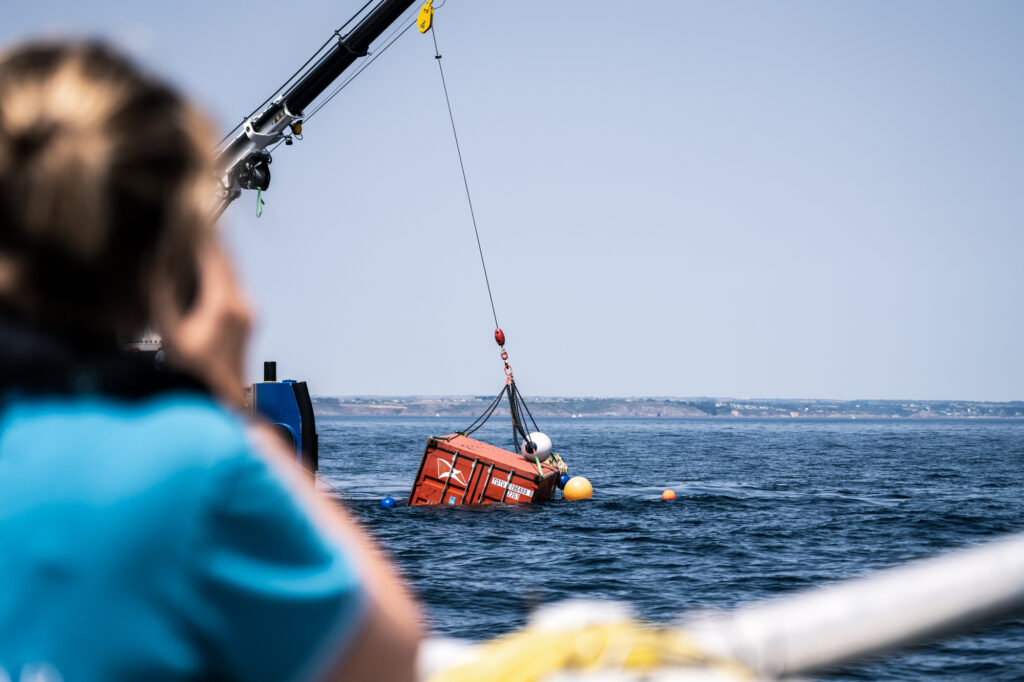
Powered by Artificial Intelligence, the SEA.AI marine camera can detect semi-submerged containers, people overboard, and other floating threats—instantly and autonomously.

marine camera detect semi-submerged container
Photo credit: ©Yann Riou_Polaryse


Maritime Safety through Deep Learning and Data

Onboard, SEA.AI combines low-light color and thermal cameras in a vision unit. These cameras capture real-time footage.

The AI then processes this data using a vast visual database built since 2018. With over 9 million images analyzed, SEA.AI has evolved to detect semi-submerged containers and other hazards with high accuracy.

The system uses ‘feature extraction’ to recognize objects by color, shape, structure, and temperature. But lighting, weather, and ocean conditions affect how objects appear.

That’s why SEA.AI trains its algorithms using hundreds of thousands of varied images. While passive image collection is helpful, active real-world testing provides more reliable data for detecting collision threats.

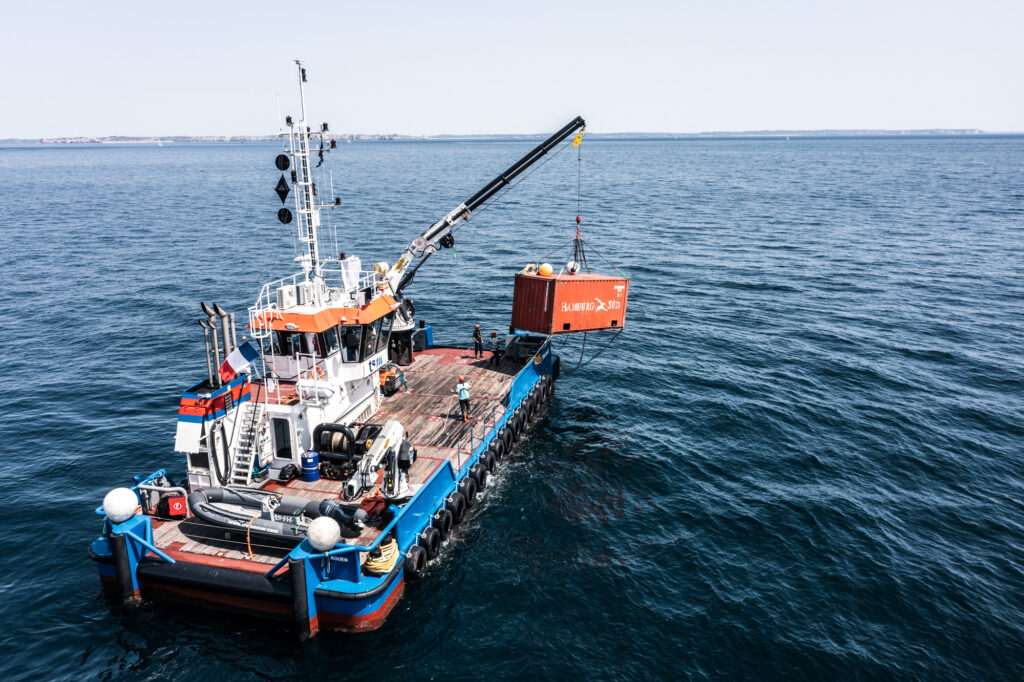
marine camera detect semi-submerged container
Photo credit: ©Yann Riou_Polaryse

Detecting Floating Containers in Real-World Conditions

One frequent question SEA.AI receives: “Can your system detect semi-submerged containers?” The answer is yes—especially because containers are large, rigid, and have a unique thermal profile.

To validate this, SEA.AI’s R&D team conducted tests from Brest aboard the Céladon Association research boat. The vessel is equipped with various SEA.AI marine camera models mounted at different heights.

This setup allowed the team to gather valuable detection data in real-world conditions. It also helped refine the algorithm to recognize containers across scenarios.


Hands-On Testing by SEA.AI’s Engineers

“We placed a container in the water and collected images throughout the day,” explains Shaban Almouahed, R&D engineer at SEA.AI. “We simulated various lighting and sun angles to create realistic collision scenarios. These images confirmed our ability to detect containers with high reliability.”

These tests also helped determine detection range. The Sentry system, for example, offers long-range detection—up to 700 meters—due to its twin thermal and optical camera design. Meanwhile, the compact Competition, used on racing yachts, detects objects within 150 meters.

From Data to Safety

Data alone isn’t enough. SEA.AI transforms that data into action through world-class AI and an unmatched image library.

With the maritime environment constantly changing, SEA.AI continues to learn from every image, helping crews detect semi-submerged containers and navigate more safely.

Related articles

Software Update V4.1 | Sharper AI, Smarter Zones, and Full Chart Integration

SEA.AI software update v4.1 is about seeing more and stressing less. The AI now detects targets that used to slip through, system stability in crowded scenarios is stronger, and Watchkeeper users on TimeZero Pro get AI detections, live video, and chart data unified in one place.
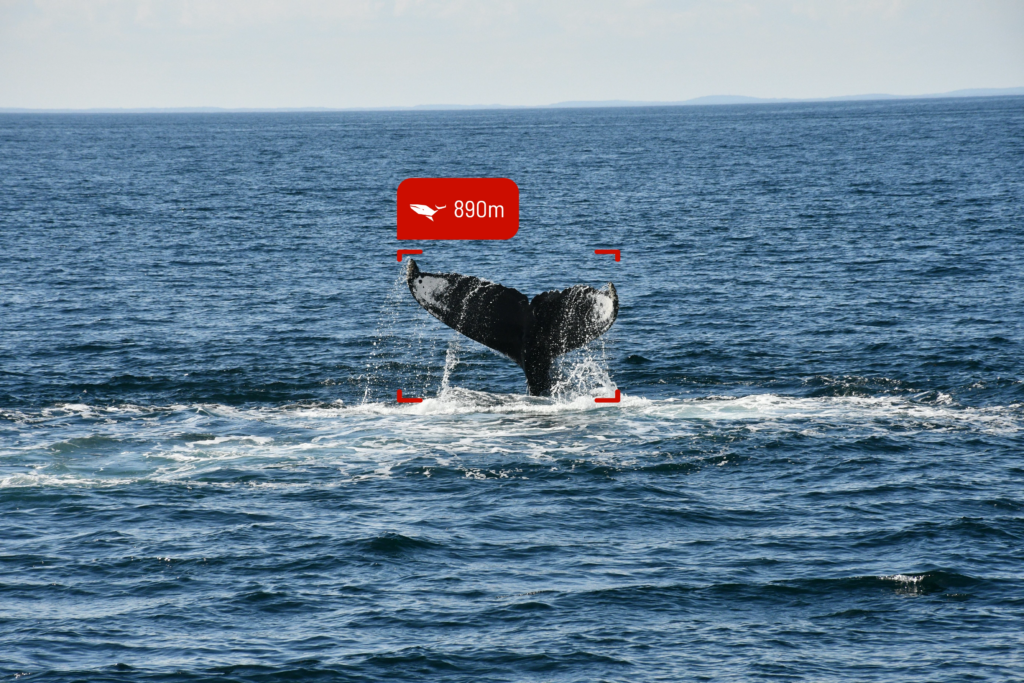
SEA.AI Awarded MITECO Tender for Marine Mammal Detection on Spanish Vessels

SEA.AI deploys AI vision systems on Spanish vessels to detect whales and improve maritime safety.
Prix Next Innov 2026 Finalist

SEA.AI has been selected as a finalist for the Prix Next Innov 2026, recognized for building maritime AI through years of real offshore operations rather than simulation.