Short of space flight, a 40,000km non-stop singlehanded yacht race around the world represents one of the toughest human-mechanical challenges that can be undertaken.
Inevitably this comes with a high attrition rate. Over the last eight editions of the Vendée Globe only 53% of the entries have completed the course.
The other 47% have been forced to retire due to gear failure or personal injury, but often due to a collision that has caused irreparable damage.
AI-Powered Collision Avoidance Comes to the Vendée Globe
Fortunately for this year’s Vendée Globe, that sets sail from Les Sables d’Olonne, France on 8 November, the risk of collision will be significantly reduced. Many of the competing IMOCAs have been fitted with a pioneering new electronic safety aid called OSCAR.
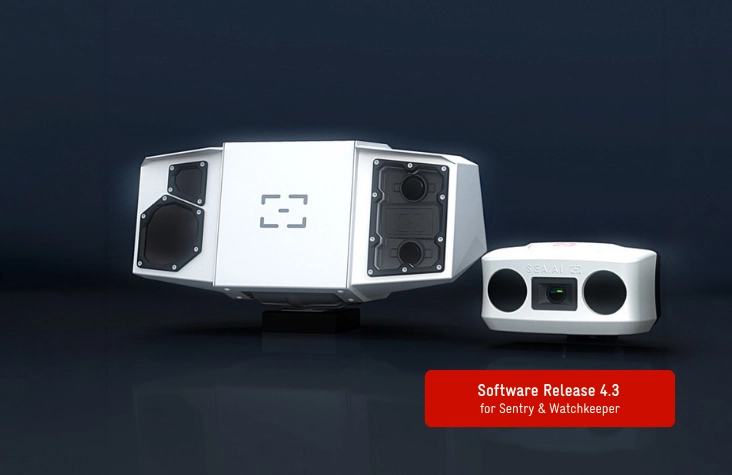
Using day and thermal cameras combined with artificial intelligence, this provides a second set of ‘eyes’ for the solo skipper both during the day and, crucially, during the night as well.
OSCAR’s aim is to prevent collision from the many potential threats a vessel is likely to encounter at sea, be they other vessels, unidentified floating objects such as logs, buoys or containers, as well as sleeping sea mammals, any of which could put a skipper out of the race…or worse.
In practice, OSCAR instantly alerts the skipper of any potential danger and indicates the position of that threat on a dedicated map. The skipper can view and record the images transmitted from the cameras
18 Vendée Globe Teams Trust OSCAR Technology
OSCAR was conceived over five years ago by Raphaël Biancale, a Franco-German automotive engineer and has since been developed by his team at BSB Group, using similar intelligent self-learning systems to those originally created for the car industry.
With former IMOCA Director General Gaëtan Gouerou, one of the creators of the CDK shipyard, and a professional yacht racing team project manager of some 30+ years experience, Raphaël Biancale set up BSB Marine in May 2018.
Since then top French offshore racing skippers and their teams have been quick to adopt OSCAR and its ground-breaking technology – among them Vendée Globe former winners Vincent Riou, François Gabart and Armel Le Cléac’h, who helped develop the system’s specification.
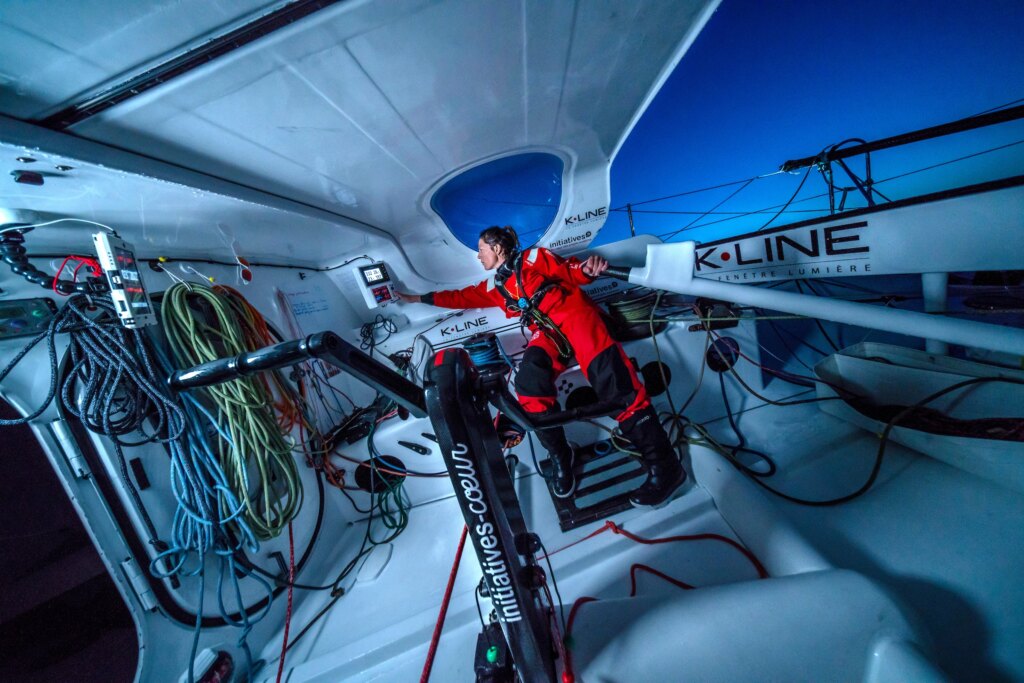
This winter’s Vendée Globe will be OSCAR’s most severe test to date. 18 of the 33 IMOCA competing in this winter’s solo lap of the planet have been fitted with the latest OSCAR system.
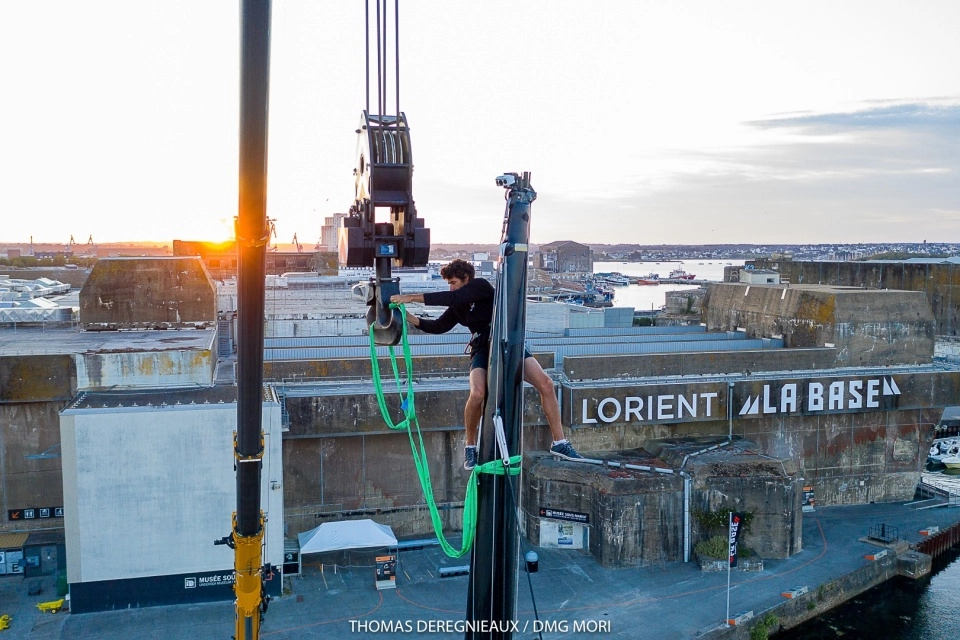
This comprises a compact, lightweight masthead-mounted box containing forward-looking day and night cameras, linked to OSCAR’s processor down below that in turn connects to any type of display.
Machine Learning Meets Maritime Safety
Ships of old used to have a man ‘up the crow’s nest’ able to survey the expanded horizon from the top of the mast – it is here that the shout ‘LAND AHOY’ comes from in pirate films.
OSCAR performs a similar duty, only it does so electronically day and night continuously. OSCAR’s innovation is to use artificial intelligence, and more precisely artificial vision, the technology that enables a machine to analyse, process and understand images.
Like a human being, the more OSCAR learns and the more experience it gains, the better it performs. The Vendée Globe will be a great opportunity for OSCAR to be refined.
Building the Future of Safety at Sea
OSCAR is making its contribution to the development of safety at sea. It is not the perfect or ultimate anti collision system, but it is pioneering a technology that will contribute greatly.
It will also improve with every mile sailed, for like a human being, the more OSCAR learns and the more experience it gains, the better it performs.
The 18 IMOCAs it is fitted to in this Vendée Globe will each provide huge learning opportunities to fine tune the database, at the core of OSCAR’s learning.
The Next Step
Artificial vision, which is already used in cars, will in the future play a central role in the development of maritime navigational aid systems such as autopilots.
In the IMOCA class many solo offshore sailors are eagerly looking forward to developments of OSCAR including an interface with their yacht’s autopilot so that it will automatically steer them away from potential collisions.