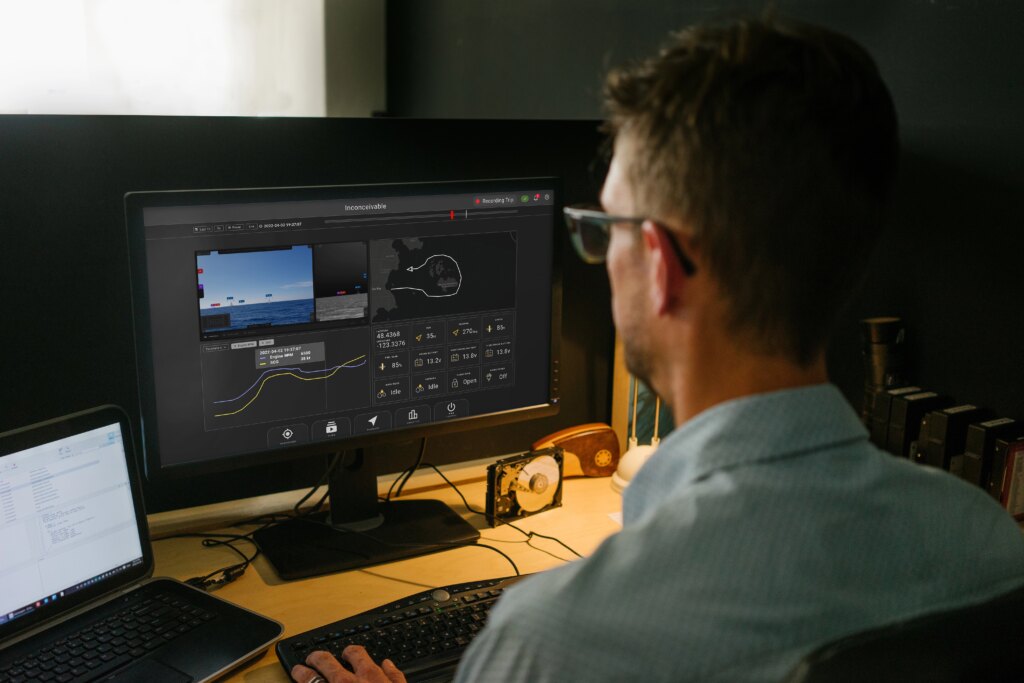
At SEA.AI , we believe that the most advanced technology is built on real experience, not just code. Every improvement to our AI-powered vision systems starts at sea, where we gather and analyze data from real-world conditions.
These sea trials provide the foundation for making navigation safer, smarter, and more autonomous.
Our goal is clear: to create AI-powered lookout systems that enhance maritime safety, awareness, and decision-making in all environments, from calm coastal waters to busy shipping lanes and open-ocean crossings.
Sea Trials: Where Learning Begins
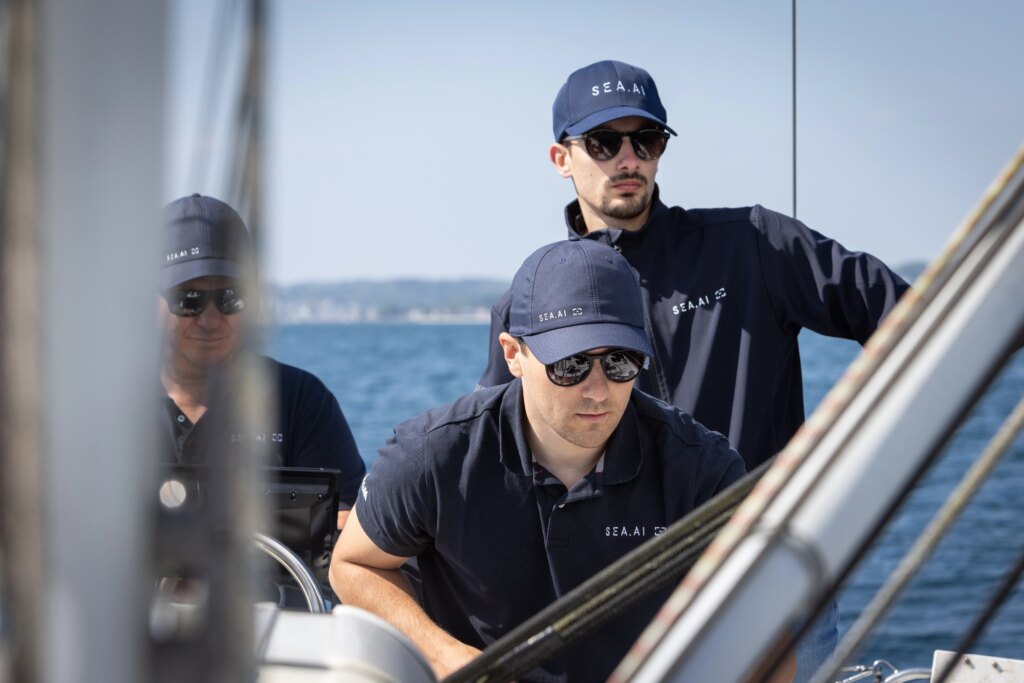
Each sea trial is designed to help us train and validate our AI under a wide range of conditions. We typically carry out one trial every week, guided by product development needs, performance insights, or customer feedback.
Each trial is carefully planned and includes two full days of work, one on the water for data acquisition, and one on land for data transfer, organization, and reporting. Some specialized tests, like detecting small floating objects in complex sea states, may require multiple sessions to capture enough variety.
What We Collect at Sea
During our sea trials in France (Port-La-Forêt & Brest) and Portugal (Cascais, near Lisbon), we collect multi-sensor data to train our AI to interpret the maritime environment as accurately as possible.
Here’s what we gather:
Video and image data from our systems (Sentry, Watchkeeper, Brain), recorded across different viewing angles and installation heights.
Navigational data (GPS, speed, heading, course) collected via NMEA connections.
Radar and AIS signals, synchronized with visual data to test multi-sensor fusion capabilities.
These datasets help us refine how our AI interprets the world around it, detecting, classifying, and tracking objects of all sizes and types.
Testing the AI in Real Conditions
Our sea trials are more than data collection; they’re the backbone of our AI evaluation process. Each trial helps us improve accuracy and adaptability across several critical areas:
System benchmarking – comparing system configurations side by side to measure consistency.
AI model testing – replaying real scenarios to validate new algorithms.
Rare object detection – collecting data on challenging but vital cases like whales, logs, debris, or people in the water.
Environmental variation – testing performance in fog, rain, night, or strong glare.
Prototype testing – validating early sensor fusion setups, such as radar integration, before deployment.
This structured approach ensures every trial directly contributes to the reliability of our AI-powered lookout technology.
What Happens Next: From Raw Data to Smarter AI
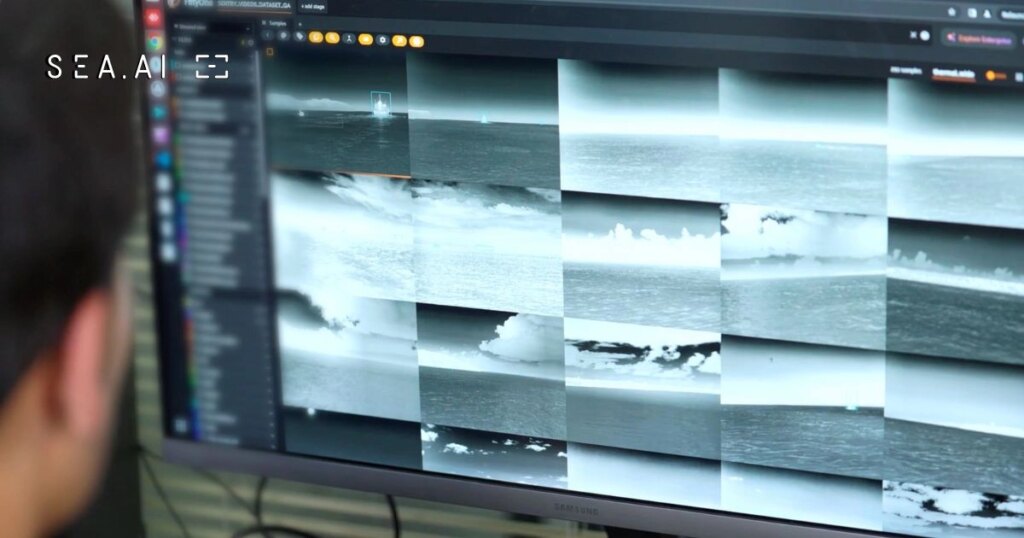
Once the sea trials are complete, all data is securely transferred and processed by our data management and annotation team in Portugal.
Here’s what happens next:
We clean and organize the recordings by vessel, date, and conditions.
Our annotation specialists label key objects and events, preparing the data for machine learning.
We synchronize timestamps across all sources (video, radar, AIS) to ensure perfect alignment for multi-sensor fusion.
This step transforms raw recordings into structured, high-quality datasets — the essential fuel for developing and validating our AI systems.
Collaborations That Broaden Our Horizons
Not all data can be captured safely or frequently during our own trials. For rare but crucial scenarios like whales, icebergs, or drifting containers — we collaborate with partners and research institutions around the world.
These partnerships help us expose our AI to an even broader range of real-world maritime conditions, ensuring that our systems can recognize and react to even the rarest threats.
Building the Future of Maritime Vision
From sea trials to data annotation, every step of our process serves one purpose: to make the ocean a safer place.
By combining advanced AI with real-world experience, we’re continuously refining our technology to deliver unmatched situational awareness at sea.