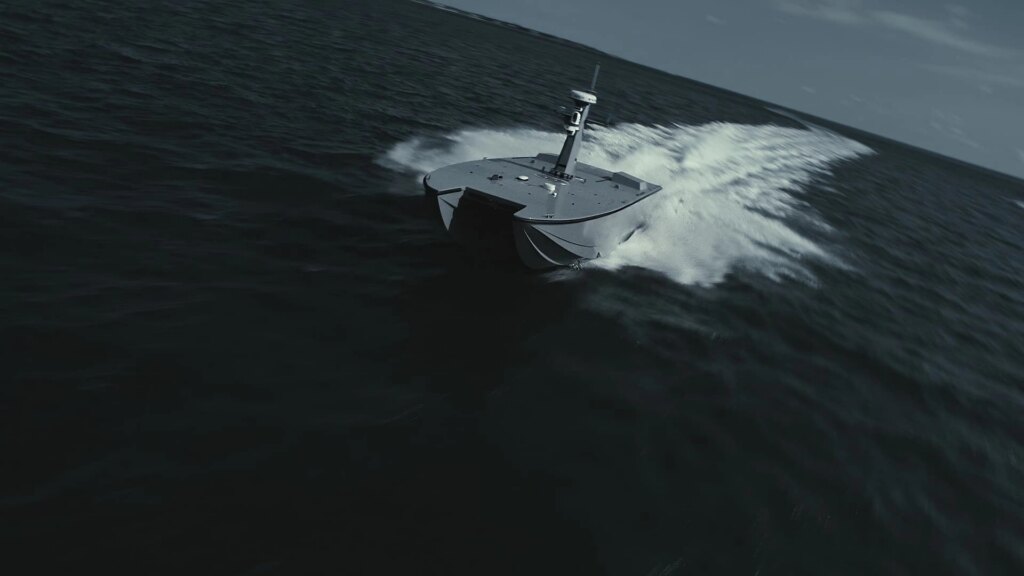
Maritime surveillance has always been a problem of scale. The world’s oceans cover more than 360 million square kilometres. Traffic ranges from supertankers with real-time position data to small fishing vessels with no electronics at all.
Monitoring all of it, consistently and in real time, is beyond the reach of any human team.
Artificial intelligence is changing that. The challenge is the same whether you are aboard a vessel, on the bridge, or running a coastal surveillance infrastructure. The goal is not more data. It is turning today’s data into decisions that are timely, precise, and operationally meaningful.
Why Traditional Maritime Surveillance Has Reached Its Limits
Maritime surveillance runs almost entirely on two technologies: AIS and radar. For decades, that has been enough. Today, it is not.
AIS is cooperative by design. Vessels broadcast their own position and identity. Any vessel that chooses not to, or that actively spoofs its location, disappears from the entire monitoring system.
Radar detects contacts but cannot identify them. In busy waters, operators face dozens of returns with no automated way to distinguish routine traffic from a genuine threat.
The problem is not just their limitations. The entire surveillance architecture depends on these two tools. When they fail, get spoofed, or get bypassed, organisations lose their only detection layer.
Most maritime domain awareness (MDA) centres cannot fully process the data they receive. Operators identify threats such as illegal fishing, vessel intrusions, and approaching USVs too late, if at all.
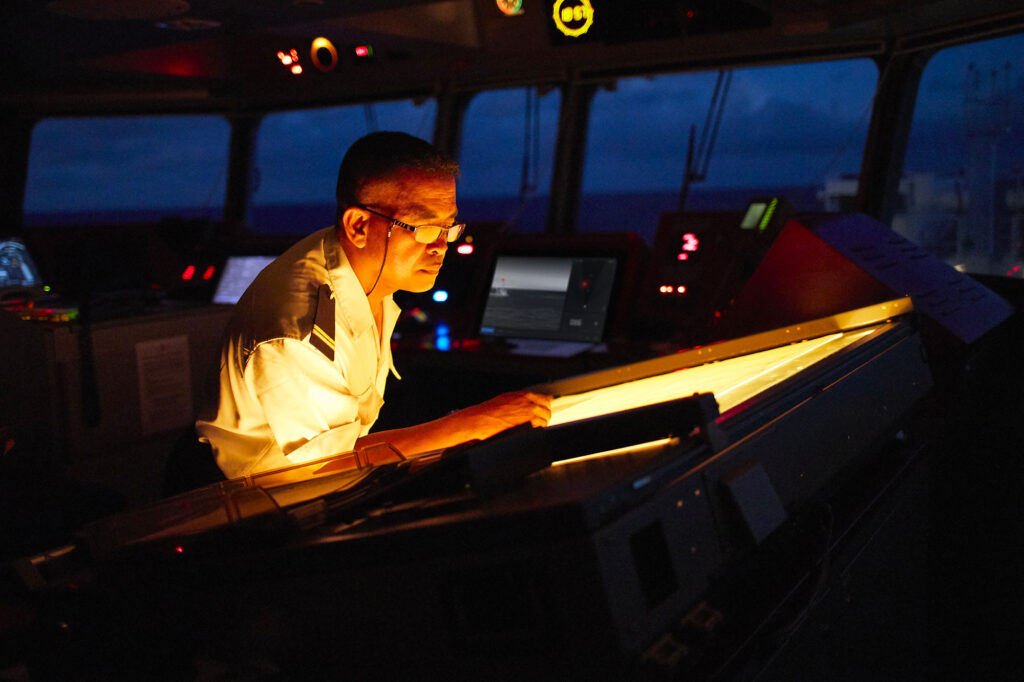
What AI Actually Adds to Maritime Surveillance
The value of AI in maritime surveillance is not more sensors or more data streams. It is the ability to synthesise disparate inputs into a coherent, actionable operational picture: automatically, continuously, and at a speed no human team can match.
1. Sensor Fusion: Connecting the Dots
At the sensor fusion level, AI integrates radar, AIS, EO/IR, and other data sources in real time. It flags anomalous contacts: vessels present on radar but absent from AIS, contacts moving inconsistently with their declared intentions, or objects appearing where they should not be.
2. Classification: Seeing What Radar Misses
At the classification level, deep learning models identify vessel types, sizes, and behaviours from optical and thermal feeds. Their accuracy exceeds what manual monitoring can achieve. Critically, this includes detecting objects that conventional sensors miss entirely: debris, small inflatables, non-cooperative autonomous vessels.
3. Decision Support: From Data to Action
At the decision-support level, AI converts sensor outputs into structured intelligence: object type, trajectory, range, and risk level. This feeds directly to operators or autonomous response systems. No manual data entry or interpretation required.
This is the architecture that turns raw surveillance into real-time situational awareness.
The Challenges That Still Need Solving
The integration of AI into maritime surveillance is not without friction, and it is worth being clear-eyed about the challenges.
1. Cybersecurity Exposure
As systems become more connected, their exposure to attack grows. AI-enabled surveillance platforms that receive and transmit data across networks create potential attack surfaces. The integrity of the perception layer depends on two things: the quality of the underlying models and the security of the data pipelines feeding them. If either breaks down, the AI loses its ability to classify contacts accurately.
2. Operator Complacency
Operator complacency is a real and documented risk in any high-automation environment. When systems perform reliably for extended periods, human operators can disengage from the monitoring process. Their ability to intervene effectively then drops. AI that augments human judgement, rather than replacing it, reduces this risk.
3. Environmental Variability
Environmental variability remains one of the most demanding challenges for AI systems operating at sea. Wave clutter, rain, fog, sun glare, and darkness all affect sensor performance. AI models that train on limited datasets can fail in conditions outside their training distribution. Real-world maritime AI requires validation across a wide range of sea states, latitudes, and lighting conditions.
4. Training and Integration
Deploying AI surveillance tools is not a plug-and-play exercise. Personnel need to understand the system’s capabilities and limitations. The technology must also connect to existing command and control architectures. Emerging IMO frameworks for autonomous shipping are beginning to define minimum operational standards, adding regulatory urgency to what is already an operational priority.
How SEA.AI Approaches These Challenges
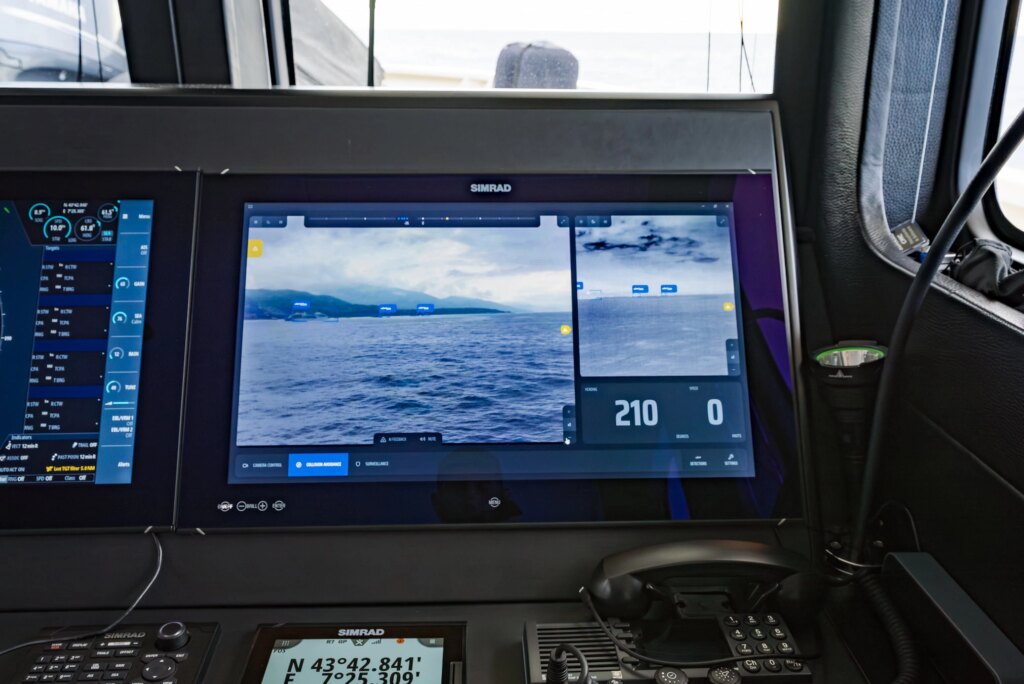
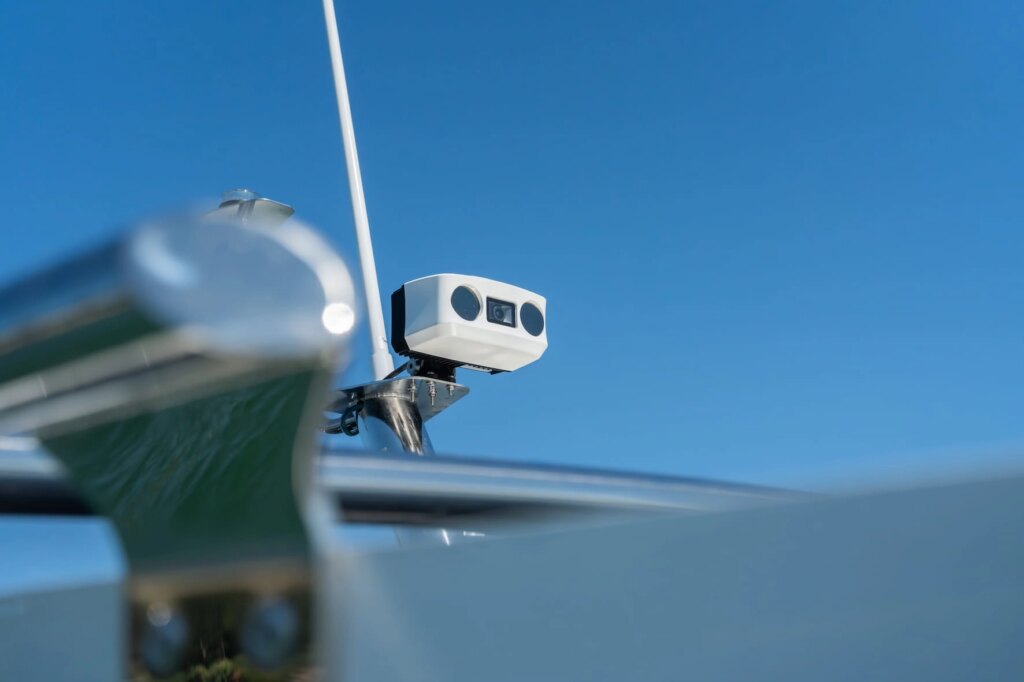
SEA.AI has been developing AI-powered visual intelligence for maritime environments since 2018. The core product is a sensor fusion platform combining optical and thermal cameras with a deep learning engine.
SEA.AI trained it on a proprietary database of over 18 million annotated marine objects. It detects, classifies, and tracks surface contacts in real time.
Several aspects of SEA.AI’s architecture directly address the challenges above.
Built on Real-World Data
SEA.AI builds performance on real-world data, not laboratory conditions. The team has validated the system across diverse sea states, weather conditions, and operational environments, from Arctic waters to equatorial coastlines. This breadth of training data makes the classification layer robust to environmental variability rather than brittle in edge cases.
Designed to Augment, Not Replace
SEA.AI’s perception layer outputs structured, machine-readable data: object type, bearing, estimated range, and risk assessment. This feeds directly into existing displays and command systems. Operators receive clear, synthesised intelligence. They retain decision authority. The AI extends what they can see and process. It does not remove them from the loop.
Integration for Existing Architectures
SEA.AI systems connect to vessel autonomy stacks, remote operations centres, and command and control platforms via a robust API. This reduces integration friction. Deployment spans a wide range of platforms, from compact 4-metre surveillance drones to full-sized naval vessels.
Naval-Grade Situational Awareness
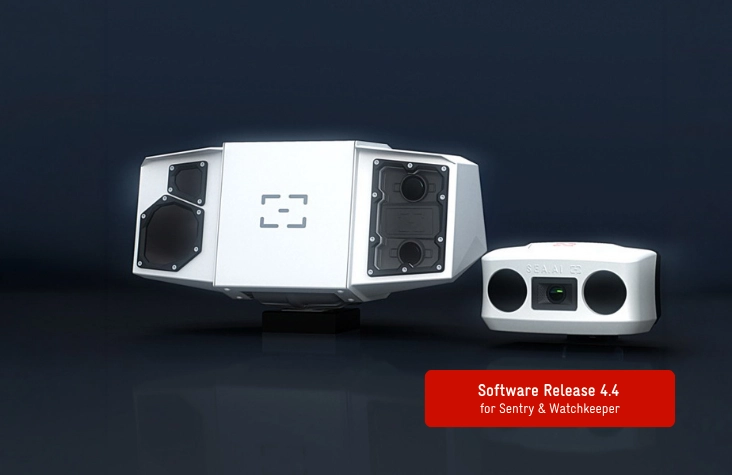
Watchkeeper or Sentry bring these capabilities to larger naval and government platforms. They deliver optical situational awareness in GPS-denied and AIS-denied environments. These are precisely the conditions where surveillance gaps carry the highest operational cost.
The Operational Case for Investing in AI Surveillance Now
The investment case for AI in maritime surveillance is accelerating. Governments are responding to real operational needs.
Governments Are Already Acting
India’s Ministry of Defence committed approximately Rs 1,600 crore to AI-equipped patrol vessels for the Coast Guard. This signals clear recognition that traditional systems are no longer sufficient.
Similar procurement programmes are underway across European and NATO navies. The NATO Alliance Maritime Strategy and the NATO Maritime Surveillance Capabilities Initiative have placed AI-enabled surveillance at the centre of allied planning. Active operations such as EUNAVFOR reflect the real-world demand these investments are responding to.
The pattern is consistent: the capability gap is visible, the technology to close it exists. Every week of delay means missed contacts and compromised operational security.
For naval forces, coast guards, port authorities, and commercial operators, the strategic question has shifted. It is no longer whether to integrate AI into maritime surveillance. It is how to do it effectively: operationally proven, cybersecure, and built to perform under real-world conditions. Not just in calm water on a clear day.
SEA.AI’s answer is a proven visual intelligence platform. It is built from the ground up for the maritime environment and deployable across the full spectrum of platforms and missions where the gap between data and decision must close.
Frequently Asked Questions
What is maritime domain awareness (MDA)?
How is AI used in maritime surveillance today?
AI is applied across several layers of maritime surveillance: fusing data from radar, AIS, and optical or thermal sensors; classifying vessel types and detecting anomalous behaviour; flagging non-cooperative contacts that do not appear on AIS; and converting raw sensor data into structured intelligence for operators. Systems like SEA.AI’s Sentry and Watchkeeper use deep learning trained on millions of annotated maritime images to perform real-time object detection and classification in operational sea conditions.
What are the biggest challenges of using AI for maritime surveillance?
The main challenges are cybersecurity exposure from networked systems, operator complacency in high-automation environments, performance degradation in adverse weather or sea states, and the complexity of integrating AI tools into existing command and control architectures. Robust AI surveillance systems address these by training on diverse real-world datasets, designing for human-in-the-loop operation, and building open API integration from the ground up.
Why is sensor fusion important for maritime situational awareness?
No single sensor provides a complete picture at sea. Radar detects but does not classify. AIS identifies only cooperative vessels. Optical cameras provide visual confirmation but are limited by range and visibility. Sensor fusion combines all these inputs in real time, with AI resolving conflicts and filling gaps, to produce a single, coherent operational picture. This is the foundation of effective maritime situational awareness, especially in contested or degraded environments.